


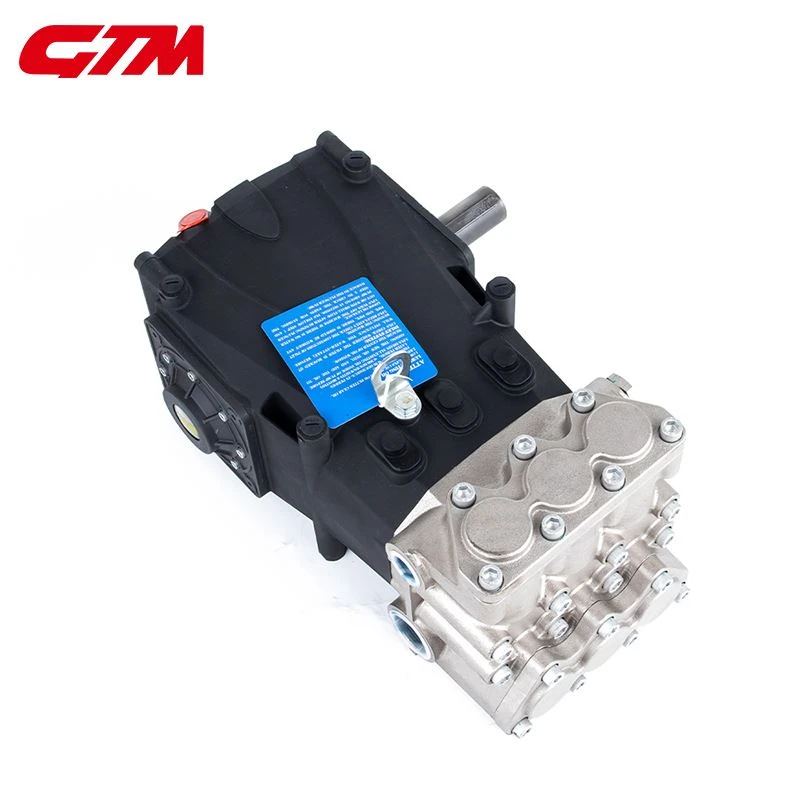
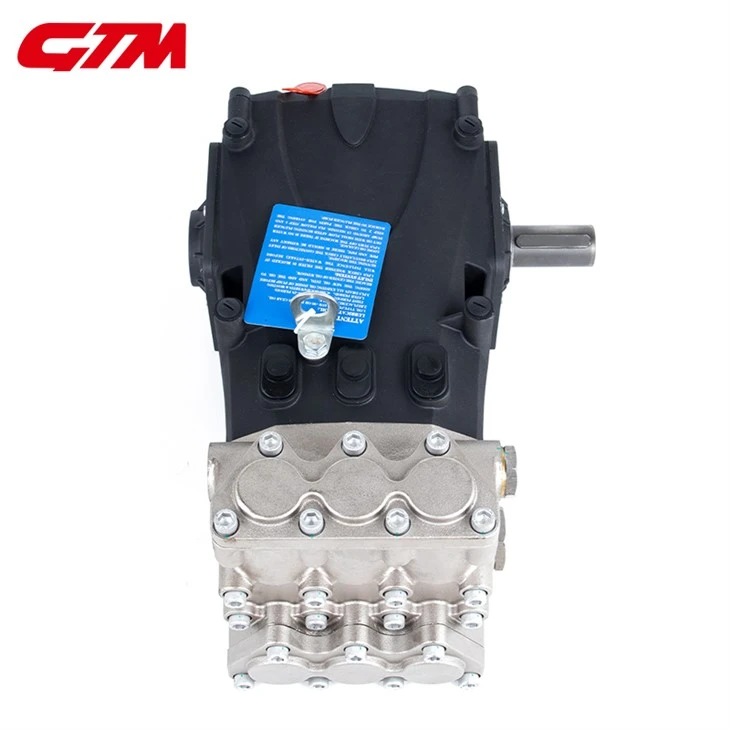
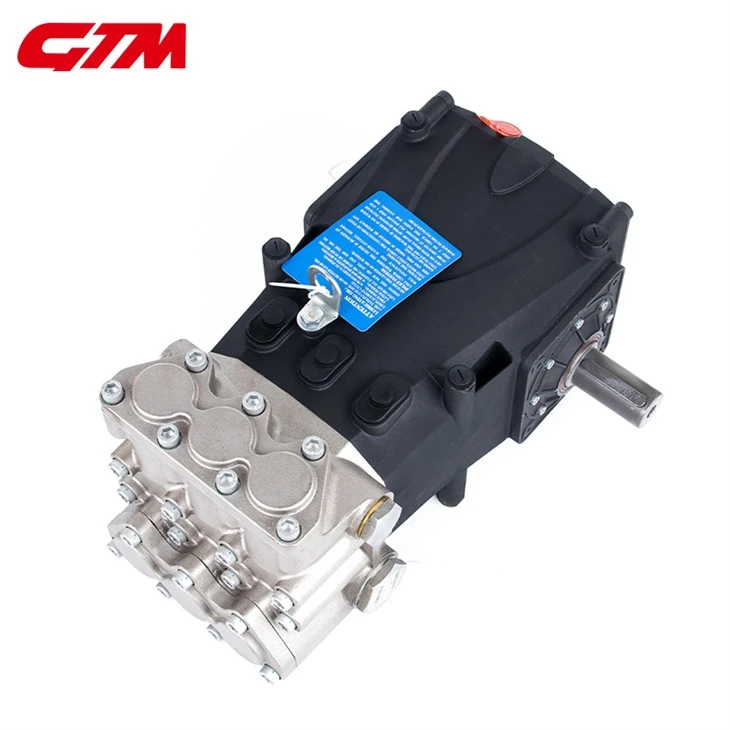
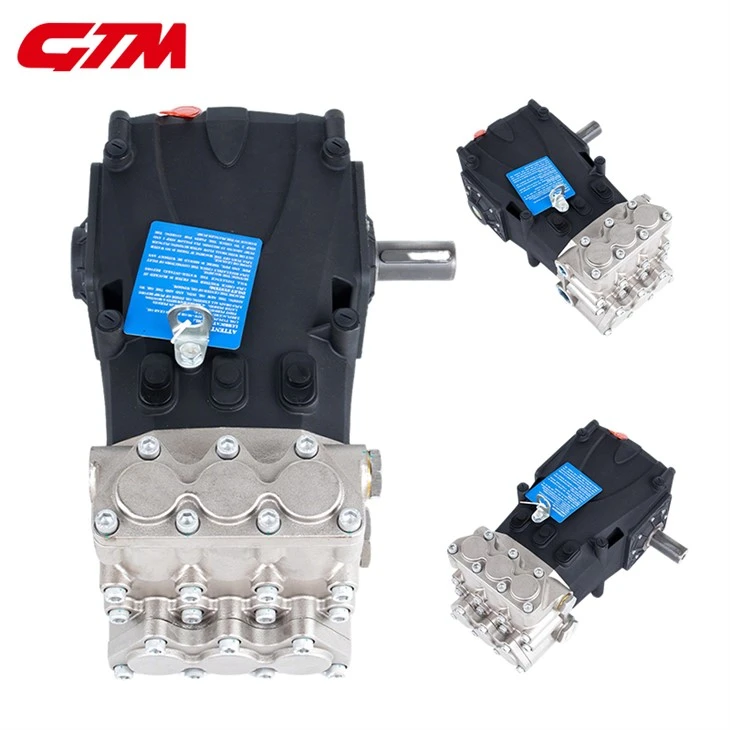
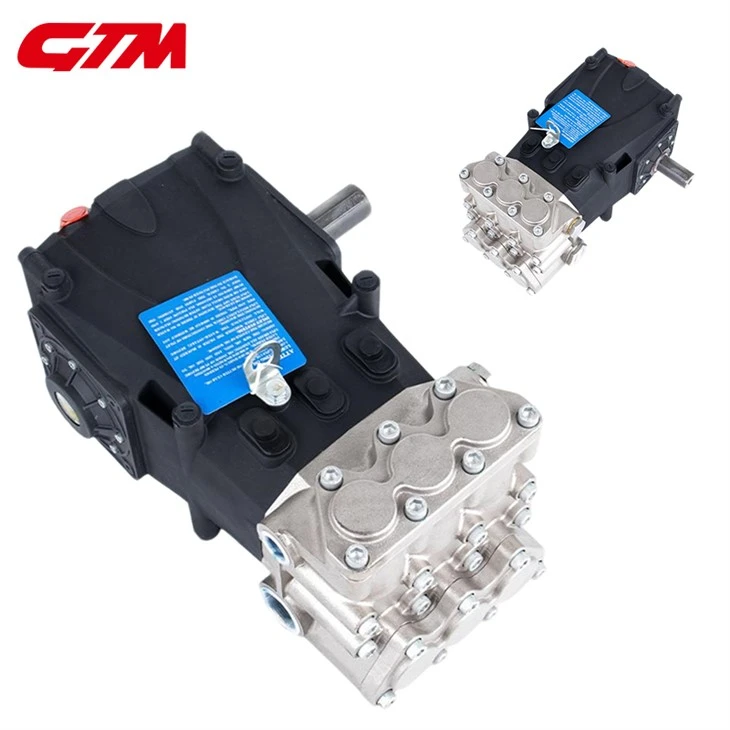
High Pressure Plunger Pump
GTM High Pressure Plunger Pump is a triplex positive-displacement reciprocating pump designed for high-pressure water and selected compatible fluid applications, with GF36 configurations delivering up to 153 L/min at 13 MPa.
Description
GTM High Pressure Plunger Pump is a triplex positive-displacement reciprocating pump designed for high-pressure water and selected compatible fluid applications, with GF36 configurations delivering up to 153 L/min at 13 MPa.
Technical Specifications
|
Model |
Flow |
Pressure |
Power |
Speed |
Inlet |
Outlet |
|
GF36 |
122 L/min / 32 GPM |
16 MPa / 2,320 PSI |
50 HP / 37 kW |
800 RPM |
G1 1/2" |
G1" |
|
GF36 |
137 L/min / 36 GPM |
14 MPa / 2,023 PSI |
50 HP / 37 kW |
900 RPM |
G1 1/2" |
G1" |
|
GF36 |
153 L/min / 41 GPM |
13 MPa / 1,885 PSI |
52 HP / 38.5 kW |
1,000 RPM |
G1 1/2" |
G1" |
The listed values represent reference operating points for the GF36 series. Final pump selection should be based on the required flow, operating pressure, speed, drive, and actual service conditions.
Selection Parameters
|
Selection Parameter |
Required Information |
|
Required Flow Rate |
L/min, m³/h or GPM |
|
Operating Pressure |
bar, MPa or PSI |
|
Maximum Pressure |
Maximum required discharge pressure |
|
Fluid |
Water or specified process fluid |
|
Fluid Temperature |
Operating temperature |
|
Fluid Characteristics |
Viscosity, corrosiveness, abrasiveness and solids content |
|
Operating Duty |
Continuous or intermittent operation |
|
Pump Speed |
Required or permissible RPM |
|
Drive |
Electric motor, diesel engine or other drive |
|
Installation |
Skid, base-mounted or other arrangement |
|
Inlet Conditions |
Supply pressure, suction arrangement and filtration |
Key Features
120° Triplex Plunger Arrangement
Three plungers are arranged at 120° intervals within the crank mechanism, distributing reciprocating loads across the pumping cycle and providing a more uniform flow pattern than single-plunger arrangements.
Forged Crankshaft
The forged crankshaft transmits drive torque to the reciprocating plunger assembly and is designed for repeated mechanical loading during continuous pump operation.
Bearing-Supported Power End
The crankshaft is supported by bearings within the power end to maintain controlled shaft rotation and transfer mechanical loads through the crank mechanism.
Hardened-Alloy Fluid End
Hardened-alloy components are used in selected pressure-bearing and fluid-contact areas of the liquid end to address the mechanical and wear conditions associated with high-pressure pumping.
Industrial Applications
Industrial Water Jetting
For industrial cleaning, surface preparation, shipyard cleaning, and other high-pressure water jetting systems. Pump selection should match the required flow, working pressure, nozzle configuration, and operating duty.
Oil & Gas
Applied in selected high-pressure fluid-service systems such as water injection and saltwater disposal. Selection should consider fluid composition, required flow, discharge pressure, operating hours, and liquid-end material compatibility.
Boiler Feed & Descaling
Used for high-pressure water supply in boiler-related systems and industrial descaling equipment. Flow, pressure, water temperature, and inlet conditions should be confirmed before pump selection.
Reverse Osmosis
Used as a high-pressure feed pump for large-scale RO and seawater desalination systems. Selection should account for membrane feed pressure, required flow, seawater salinity, temperature, and liquid-end and sealing material compatibility.
Hydrostatic Testing
Used in pressure-testing systems for pipelines, pressure vessels, valves, fittings, and other pressure-containing equipment. Pump selection should be based on the required test pressure, system volume, filling rate, and test procedure.
Configuration Options
Plunger Configuration
Ceramic, steel, and coated plunger options can be specified according to the fluid characteristics and operating conditions.
Liquid-End Configuration
Valve, valve-seat, sealing, and fluid-end components can be selected according to the working fluid and pressure requirements.
Drive Configuration
Direct-drive and power-frame arrangements can be configured according to the available drive system and equipment layout.
Connection Configuration
Inlet and outlet connections can be specified according to the system piping requirements. The GF36 configuration uses a G1 1/2" inlet and G1" outlet.
Quality Control Process
Material & Component Control:
Materials and key components are reviewed according to pump specifications, including crankshafts, plungers, valves, sealing components, and pressure-bearing parts.
Machining Accuracy Control:
Critical components are manufactured and inspected with attention to dimensional accuracy, surface condition, and component matching requirements for stable mechanical operation and sealing performance.
Assembly Quality Control:
Power-end and liquid-end assemblies are checked during installation, including crankshaft positioning, bearing installation, valve assembly, plunger fitting, and sealing component arrangement.
Hydraulic Performance Testing:
Completed pumps are evaluated under specified operating conditions, including flow output, discharge pressure, leakage condition, and operating stability.
Final Verification:
Before shipment, pump configuration, test results, external condition, and required documentation are reviewed to confirm delivery requirements.
GTM Manufacturing & Engineering
Established in 1997
Founded in 1997, GTM has nearly three decades of manufacturing experience in high-pressure plunger pumps and pressure washing equipment.
20,000㎡ Manufacturing Facility
GTM operates a 20,000㎡ production facility with more than 150 employees involved in manufacturing and related operations.
90+ Product Models & 80+ Patents
GTM has developed more than 90 product models and holds 80+ patents covering high-pressure pump and related equipment technologies.
Engineering & Technical Support
GTM provides technical support covering pump selection, operating parameters, specifications, documentation, and product-related engineering requirements.
FAQ
Hot Tags: high pressure plunger pump, China high pressure plunger pump manufacturers, suppliers, factory
Send Inquiry
You Might Also Like


